LIKE-A-PRO – Results of socio-environmental impacts of protein products
Impact Institute’s work as part of the LIKE-A-PRO consortium (2022-2026)
The LIKE-A-PRO project aims to support the transition of alternative proteins from niche to mainstream, facilitating the adoption of sustainable and healthy diets.
Funded under the European Union’s Horizon Europe program over 4 years (2022-2026), LIKE-A-PRO relies on the expertise of 41 consortium partners and affiliated entities.
Impact Institute, one of the project’s partners, supports the transition towards an efficient, just and sustainable food system by quantifying the environmental and social cost of European protein production and consumption.
Project scope
Impact Institute’s has been part of the LIKE-A-PRO consortium (2022-2026). The project is now (September 2026) coming to a close, and this is an update to our earlier published work as you can read here.
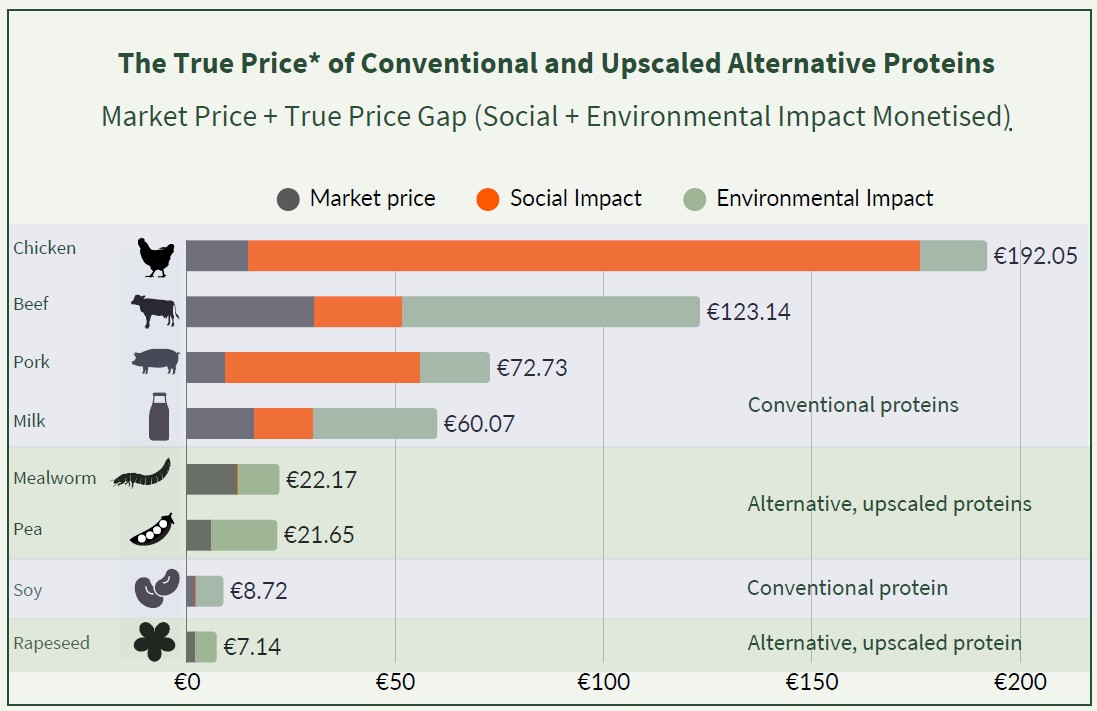
The scope of this impact assessment consisted of a True Price assessment of 5 key conventional protein sources: beef, pork, chicken, milk, and soy (the only one plant-based). In addition, 6 alternative proteins were assessed: rapeseed, pea, mushroom, microbial, krill and mealworm protein. Three of the alternative proteins are plant-based (rapeseed, pea and mushroom), two are animal-based (krill and mealworm) and one is microbe-based.
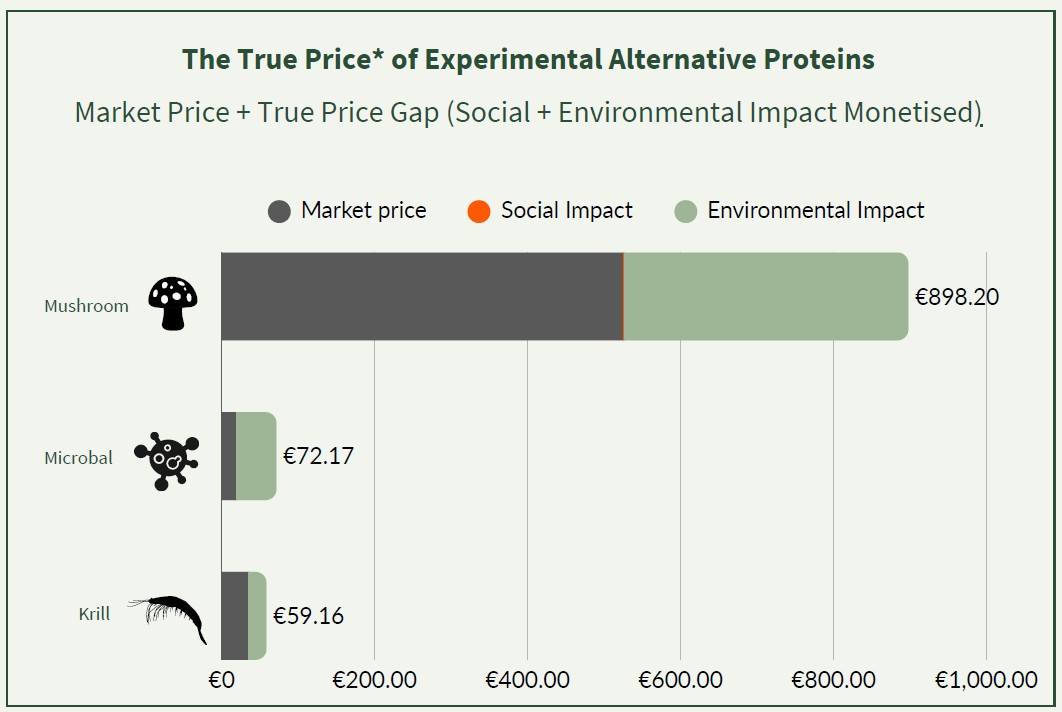
The proteins differ substantially in how mature they are in terms of scale of production: the conventional proteins are traditional proteins eaten widely across the EU for a long time, and thus production is largely upscaled. In contrast, most of the alternative proteins are upcoming and are still in a more experimental phase. Therefore, the results of upscaled and experimental alternative proteins are presented separately.
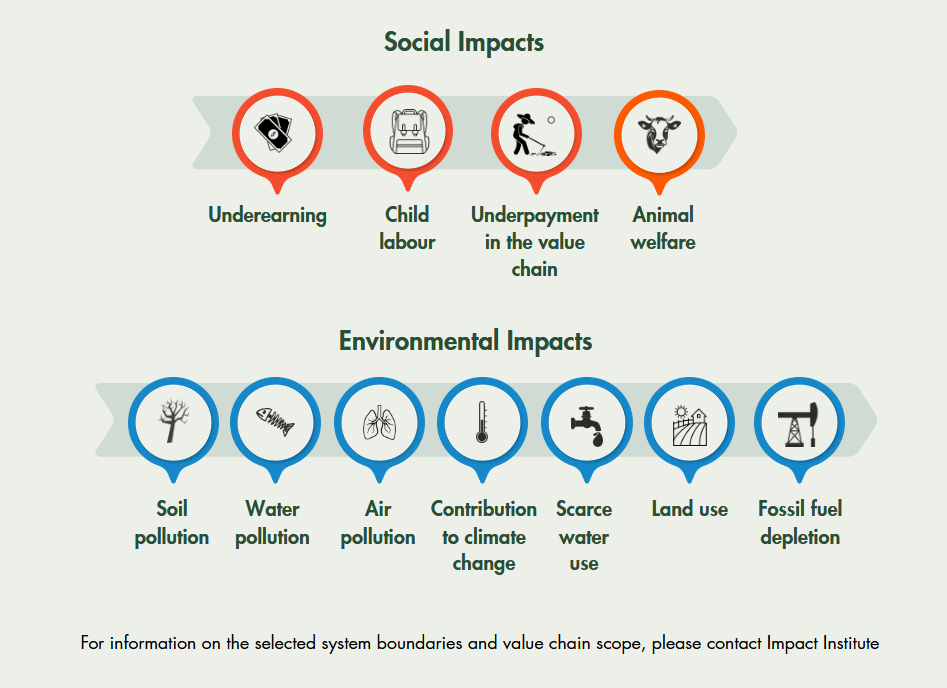
The environmental costs included in the assessment are climate change, land use, fossil fuel depletion, scarce water use and air, water and soil pollution. The social costs in scope were underearning, underpayment, child labour and animal welfare. The 7 material environmental and 4 social impacts selected were based on materiality and data availability.
Interpretation of results
- Maturity of scale: the proteins differ substantially in how mature they are in terms of scale of production. Most of the alternative proteins are upcoming and are still in a more experimental phase, and thus not fully established yet (e.g. high energy use). At later points in time, when the production matures, reduction of the True Price gap is likely.
- Data representativeness: the data underlying the alternative protein analyses is company-specific. The impacts can be different if produced by another company (or in another country). For example, the impact of electricity used depends on the renewable energy share in the electricity grid of the country.
- Scope of external cost: The environmental and social costs included in this assessment cover the most relevant external costs, but other types of external costs can become relevant when data or methods becomes available.
“Plant-based, upscaled alternative proteins can lower the True Price Gap of protein production”
Results & Conclusion
The most important results are that the upscaled, alternative proteins have lower True Price gaps than most conventional proteins. This is primarily driven by lower animal welfare and environmental costs. Alternative proteins, particularly the upscaled, plant-based proteins, have significant potential to reduce the environmental and social cost of European protein production and consumption. Soybean, even though it is a conventional protein, was also linked to a low True Price (gap), further strengthening the case for plant-based protein.
Further research on the external cost reduction potential of the alternative experimental proteins is needed to increase comparability between upscaled, alternative proteins and the other proteins.
These insights can contribute to the protein transition by guiding policymakers in developing regional strategies and supporting investors and agri-food companies to shift towards more sustainable, healthy and fair food systems.
Results of the True Price assessments:
If you would like to share this information, you can download this: TwoPager Like A Pro, Impact Institute